Search This Blog

Monday, May 26, 2025

The Oppressor

The Oppressor: Darth Angral’s Dreadnought of Wrath and Final Judgment


📖 General Lore:

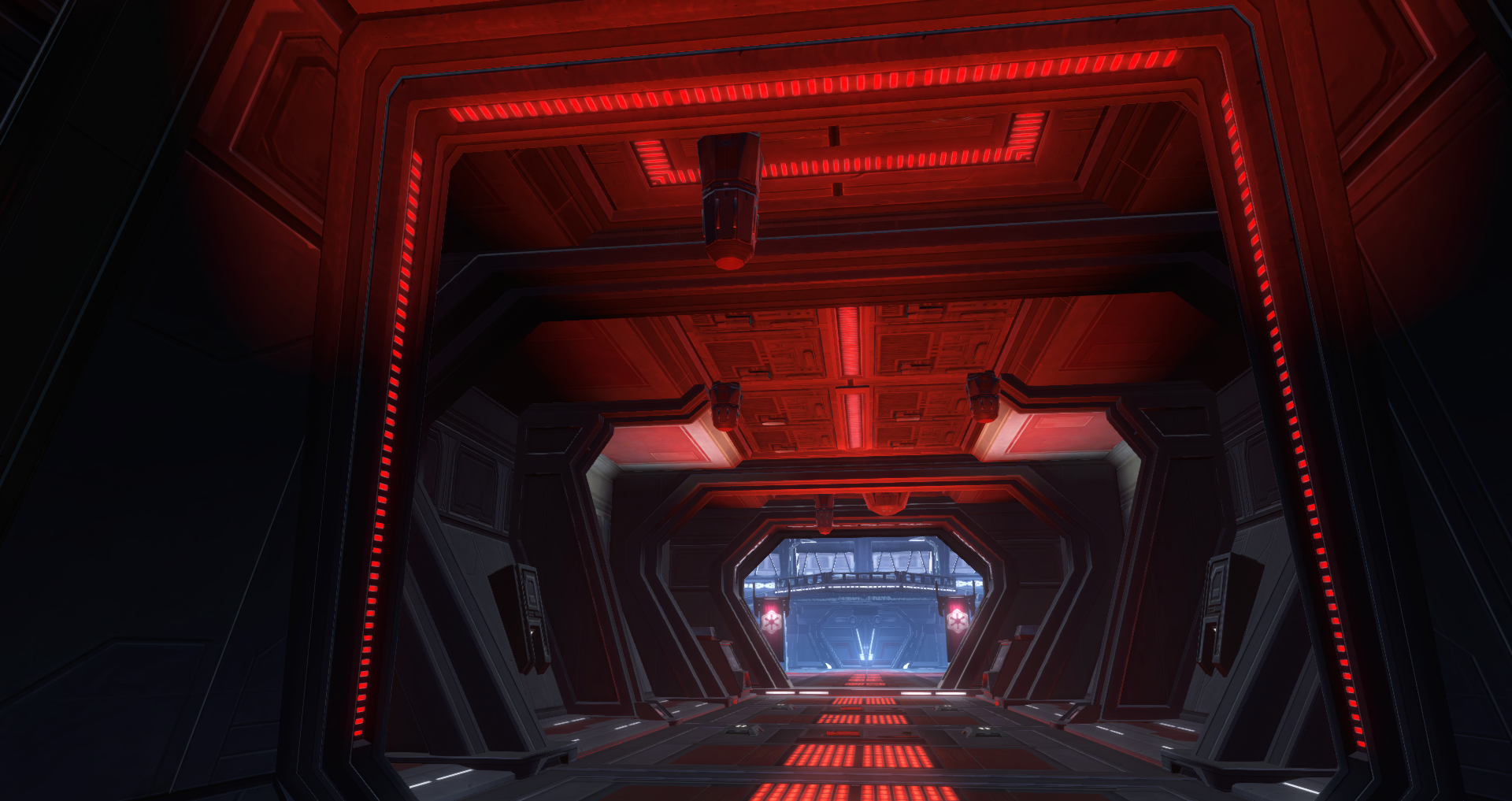
The Oppressor was a Sith Dreadnought of immense size and brutality, forged in the depths of Imperial ambition and darkness. It replaced The Darkness as Darth Angral’s personal flagship during the height of the Cold War. A terrifying symbol of the Sith Lord’s wrath, The Oppressor was not merely a warship—it was a stage for vengeance, fear, and spectacle.

As part of the Sith campaign to destabilize the Galactic Republic, Darth Angral dispatched his apprentices to hunt down and seize Republic superweapon projects. His operations were not covert; they were calculated to provoke fear. Among his most infamous acts aboard The Oppressor was the public execution of Jedi Master Orgus Din, broadcast across the HoloNet. The event sent shockwaves throughout the galaxy and became a rallying call for Jedi retaliation.

Following the devastating assault on the planet Uphrades, Angral turned his wrath toward the very heart of the Jedi Order—Tython. The Sith dreadnought entered the system with intent to annihilate the Jedi homeworld. Yet, in the shadows of vengeance stood resolve: a young Jedi Knight and their Padawan, Kira Carsen, boarded The Oppressor, sabotaged its internal power systems, and confronted Darth Angral upon the very bridge where Orgus Din had fallen.

In the final moments, the Sith Lord was defeated, and The Oppressor was consumed by destruction—symbolizing both the end of Angral’s terror and the resilience of the Jedi spirit.


Jedi Lore Keeper’s Perspective:

“A vessel can carry more than crew—it may carry pain, anger, or redemption. The Oppressor bore all three before it fell among the stars.”
Master Sal-Daril, Tythonian Archivist

To the Jedi, The Oppressor represents a cautionary tale not just of war, but of pride, power, and the dangers of revenge. While ships are often tools of travel or defense, this dreadnought became a temple of wrath, consecrated with blood and vengeance. The live execution of Master Orgus Din remains one of the most searing wounds in recent Jedi history—a moment meant to break morale, yet it only galvanized resolve.

The Jedi teachings remind us that anger begets suffering. And Darth Angral, in his obsession with retribution, chose to wield fear as his greatest weapon. Yet it was not fear, but hope and duty, that brought about his end. The Knight who boarded that vessel did not act out of revenge, but out of necessity—to protect the light, not punish the dark.

The fall of The Oppressor over Tython is a symbol etched into Jedi history: when darkness seeks to erase light, it is light that must illuminate the path—no matter the cost.


Video


Wednesday, May 21, 2025

Null Cannon

Null Cannons of Hoth: The Republic's Technological Equalizer in the Cold War


📖 General Lore:

Null Cannons were a rare class of electromagnetic superweapons developed by the Galactic Republic during the Cold War era. Unlike conventional weaponry designed to inflict physical damage, these cannons emitted concentrated energy pulses capable of disabling or "nullifying" complex technology systems—from starships and droids to defensive platforms—without harming organic life.

The prototype model was aboard a Republic ship that crash-landed on the icy world of Hoth, a planet already teeming with dangers from both the elements and entrenched factions such as the White Maw pirates. Admiral Revald, commanding Republic forces on Hoth, sought to recover the weapon, believing it could shift the balance against the Sith Empire. However, the White Maw, under the notorious Captain Sero, had their own plans. Sero began producing counterfeit versions of the Null Cannon, hoping to equip his raiders with a disabling weapon that could level the playing field against both Republic and Sith forces.

Sero briefly attempted to negotiate with the Republic for leverage, but trust collapsed after a Republic strike team—intended as backup—was misinterpreted as betrayal. The conflict escalated into open battle, culminating in the Republic reclaiming the prototype and destroying Sero’s illicit operation.


Jedi Lore Keeper's Perspective:

“Not all weapons are designed to kill. Some, like the Null Cannon, sever connection rather than flesh—turning power against itself. It is a rare technology that disables rather than destroys. And that, too, is a form of mercy—though not without consequence.”
Archivist Mordaé, Lore Keeper of Tython

From the archives of the Jedi Order, the Null Cannon represents a curious intersection between ethics and warcraft. Unlike the dark superweapons of the Sith, which aim for domination or annihilation, the Null Cannon was envisioned as a humane deterrent—capable of ending a battle without widespread death. Yet the Jedi remain cautious.

The Force teaches that intent is as important as outcome. While disabling enemy technology may seem merciful, the wielding of such power still bears the risk of imbalance. Should such a weapon fall into the wrong hands—as nearly occurred on Hoth—it could be used to enslave, disable planetary infrastructure, or isolate entire populations. The Jedi remind all who would use such a device that power must be guided by wisdom, and peace cannot come from coercion alone.


Map


Photo Gallery

\


Video


Monday, May 19, 2025

Lord Nefarid's hideout

The Shadow Vault of Glarus: Lord Nefarid’s Final Stand

Jedi Lorekeeper Archive Entry #8831.AL | Curated by Keeper Selan Marrin of the Alderaanian Watchtower


📍Location:

Glarus Valley, Southern Hemisphere, Alderaan

Hidden deep within the rugged cliffs and mist-veiled forests of Glarus Valley, amidst ruins older than any recent war, the Sith Lord Nefarid established his stronghold — a bleak and fortified hideout, cloaked in both physical isolation and dark side energy. It was here, during the bitter conflict known as the Alderaan Civil War, that Nefarid brought the galaxy to the edge of a new form of devastation.


⚖️ Context: A Civil War, a Superweapon, and a Line Crossed

The Alderaan Civil War, a three-sided conflict among royal houses, was already spilling noble blood across pristine fields. Yet in the shadows, Nefarid — an agent of the Sith Empire — sought to escalate the chaos by introducing a forbidden weapon of surgical annihilation: the Death Mark Laser.

Designed to assassinate political leaders from orbit with precision, the Death Mark was not just a weapon of war — it was a device for erasing voices from the galactic conversation, silencing those who opposed the Empire without warning, mercy, or trial.

After the Jedi Knight—whose name remains redacted in several records—disabled the generators at the Mensaav Military Laboratory, Nefarid salvaged what he could: the Death Mark’s central computer core, and retreated with it into the Glarus hideout.


🕯️ The Confrontation in the Valley

The final encounter between the Jedi Knight and Lord Nefarid was no mere battle over territory — it was a struggle over conscience and the nature of power. The hideout, now filled with Sith wards, corrupted security tech, and false paths, served as a symbolic echo of Nefarid’s mind: brilliant, deceptive, and driven by control.

The Jedi Knight penetrated the stronghold, fending off elite Sith guards and corrupted Alderaanian mercenaries, reaching the superweapon’s core as Nefarid prepared to activate it once more.

"One life or ten thousand—it is but calculation. Emotion clouds judgment. Let the Death Mark think for us."
— Lord Nefarid, prior to the duel

The duel was decisive. Though a master of forbidden lightsaber forms and mental manipulation, Nefarid fell before the Jedi’s focused resolve. Following the Sith Lord’s defeat, the Knight destroyed the Death Mark computer, ending its threat permanently.


🌌 Lorekeeper Reflection: A Trial Not on Korriban, But Alderaan

“Lord Nefarid’s downfall teaches us this: when reason is stripped of compassion, it becomes cruelty in logic’s disguise.”
— Keeper Selan Marrin

From the Jedi perspective, Nefarid’s hideout stands not only as a site of Sith power but as a cautionary tale of how intellect can be twisted into tyranny. Nefarid believed himself a visionary, crafting a future free of dissent — but in doing so, he discarded the very soul of sentience: the right to choose, to err, to live.

The Jedi Knight who confronted him could have pursued vengeance — many noble houses had suffered under the Death Mark’s early tests. Yet instead, the Knight chose justice over revenge, mercy over wrath, and destruction of the weapon, not the man.


📜 Aftermath and Site Legacy

The ruins of Nefarid’s hideout remain in Glarus Valley, though much of it collapsed during the duel’s aftermath. It is said that the Force still lingers there — a mix of anger and redemption, clashing like storm winds in the trees.

Some Jedi pilgrims visit the site in quiet reflection, listening to the wind move through stone corridors, feeling the shadow of what almost came to be. Not as a celebration of battle, but as a meditation on what must be done to preserve peace without becoming the destroyer.


🧭 Field Notes: Glarus Hideout Anomalies

  • Force Echoes detected at the command chamber — requires sensitive calibration to avoid disorientation

  • Residual data shards from the Death Mark system remain sealed in encrypted vaults (under watch of House Organa)

  • Sith alchemical residue detected in wall etchings — caution advised for those with vulnerable Force sensitivity


📖 Jedi Personal Journal: Entry 2247 — Glarus Valley, Alderaan

Author: Unnamed Jedi Knight, following the fall of Lord Nefarid
Filed in the Temple Archives under “Reflections from the Outer Conflicts”


"I walked into a place built on fear today.
And left it in silence."

Lord Nefarid’s hideout was not merely stone and circuitry — it was will, calcified. A dark geometry of purpose. Every corridor twisted with precision, every console tuned to bring distant death. There was no blood on the walls, only the ghost of decisions made far from their consequence.

He greeted me like a man playing his final card — not with desperation, but with certainty. He believed what he built would outlive him. He thought he had reshaped war into a clean, surgical art.

But the Force does not separate life from life. A child in House Alde feels the same fear as a soldier in House Thul. No targeting algorithm can measure what a single death does to the soul of a world.

I defeated him. But I do not celebrate.
Victory in combat is only a pause, not a solution. He wielded logic like a lightsaber. I had to meet him with clarity, not hatred. He asked me if I hesitated.

I did.

Because even in his downfall, I saw the truth: power always tempts us to quicken peace, to make it more efficient.
But peace must grow, not be forced into being.

After the duel, I stood beside the shattered Death Mark core. It sparked once, then died. I did not feel triumph. I felt… weight.

I left a small stone on the console, a Jedi tradition of quiet remembrance. Not for him. But for the choice made. For the balance held.


"May the next breath I take serve the living.
May my hand not forget mercy,
even when it must wield fire.
May silence speak where violence once roared.
This is the Jedi path."

— End of Entry


📜 Archive Entry: “Of Stones and Shadows”
Filed by Jedi Lore Keeper Vira Tann, Alderaan Pilgrimage Series, Entry 12
Location: Former Site of Lord Nefarid’s Hideout, Glarus Valley


The wind here still moves as if whispering secrets it cannot bear to keep. Glarus Valley has healed in places—but the echo of fear takes longer to fade than blaster marks on stone.

I stood today in the shadow of what remains of Lord Nefarid’s hideout. The walls are weathered, but some foundations remain, stubborn in the ground, as if even stone resists forgetting. It was here, decades ago, that a Jedi Knight brought a swift and necessary end to a weapon of impersonal destruction—the Death Mark. But the deeper story lies not in the duel, nor in the circuitry.

It lies in a small stone still resting where no dust dares settle—set gently on what was once a command console. I have read that Jedi sometimes leave stones not as grave markers, but as tokens of decisions. This one… speaks volumes.

The Knight who faced Nefarid did not mark a grave. He marked a threshold—between what could be done, and what should. That line is faint, often shifting like Alderaan’s own weather, but we as Jedi are trained to feel it in our bones. Some call it intuition. Others, the Living Force.

The Knight could have destroyed the hideout, the weapon, and Nefarid without pause. But records show hesitation—a moment of presence. He paused to feel, not to strike. That moment, I believe, is what preserved him from becoming the very thing he opposed.

I teach Padawans this lesson often:

"The Force is not only light because we shine it—it is light because we choose not to cast shadows."

Let this site remind us that our greatest victories are not written in destroyed machines or defeated Sith—but in the choices we make to remain Jedi, even when no one is watching.


🪶 “It is easier to destroy a weapon than to disarm hatred. But a Jedi must try both.”
—Vira Tann, Lore Keeper, 3651 BBY


Map and Photo Gallery


Video


Esus Mesa

Esus Mesa: Trial Beneath Twin Suns

Jedi Lorekeeper Archive Entry #7742.TT | Recorded by Keeper Valoren Isari


📍Location:

Jundland Chasm, Tatooine – Outer Rim Territories
Mesa-top Coordinates: Grid 8-C, elevation 914m


High above the wind-carved cliffs of the Jundland Chasm, where the sun-scorched winds whisper the stories of millennia, lies Esus Mesa — a lonely stone plateau tethered to the surrounding cliffs by a narrow, weathered bridge. In a world shaped by extremes — blinding suns, shifting sands, and endless silence — this mesa became the unlikely stage for a turning point in the life of one Jedi… and one Sith.


A Duel of Echoes and Beliefs

In the year 3643 BBY, during the tense period of the Cold War between the Galactic Republic and the Sith Empire, a Jedi Knight answered a call that echoed across more than space — it reached into the soul. The message was simple:

“I await you at these coordinates…”
Lord Praven

Praven, a Sith Lord of considerable renown, was known not only for his skill in the Force and blade, but for his unwavering personal code of honor — a rarity among his kind. It was here, atop the Mesa under twin blazing suns, that he issued his challenge: a lightsaber duel, one-on-one, with a Knight who embodied the Jedi’s rising hope.

The duel was fierce, but what occurred atop Esus Mesa was not only a test of strength — it became a crucible of belief and redemption.


Why Esus? The Mesa as Symbol

From the Lorekeeper’s perspective, Esus Mesa serves not merely as a battlefield, but as a symbol of confrontation at the edge of isolation. To cross the bridge to its summit is to cross into a moment of clarity, suspended above the chaos of the world, where nothing remains but the opponent and one’s own truth.

The Mesa is silent, still, and barren — a fitting mirror to the inner stillness a Jedi must hold, even in the face of conflict. It is also an echo of ancient Jedi dueling traditions, where trials of combat were often set in isolated or natural environments, requiring the combatants to be as attuned to their surroundings as they were to the Force.


The Outcome and What Followed

Though Praven was defeated, he was not destroyed. The Jedi Knight — guided by compassion and vision — offered mercy instead of death. And in that moment, Praven’s path shifted. In time, he would renounce the Sith, and turn toward a different destiny — one that surprised many, and inspired more.

"There was strength in his strike, yes… but greater still was the strength in his mercy."
— Keeper Valoren Isari

This moment atop Esus Mesa would echo throughout the archives — not because it was a famous battle, but because it exemplified the true strength of the Jedi way. The Jedi does not seek victory through violence, but through understanding and peace.


The Mesa Today

Now, Esus Mesa lies still once more, a silent witness to the passing of time. Nomads pass below, unaware of the battle that once occurred above. Sand and wind have begun to reclaim the path. Yet to some — to those who study the intersections of place and destiny — it remains a sacred site.

Some Jedi pilgrims have sought it out in solitude, meditating on the stone bridge or walking the paths where Knight and Sith once met — not for violence, but for truth.


Jedi Council Commentary: On Trials of the Blade

"There are places where the Force gathers like water in stone. Esus Mesa is one such place — not because of its power, but because of what it demanded of the Jedi who stood there. To strike, or to spare. To dominate, or to guide. These are the moments that define us."
— Master Tol Braga


📝 Final Thoughts from the Lorekeeper

Esus Mesa reminds us that not all battlefields are made of blood and fire — some are made of stillness, choice, and the courage to see the Light in another. When next you meditate, imagine standing on that mesa beneath Tatooine’s twin suns. Ask yourself: what would you choose?


Map and Photo Gallery


Video